Thank you for reading my earlier post (https://thetamhankar.com/?p=4090) where in ‘Chapter 1’ I had described my experiences about few attractions; some may not be known to most. In this next chapter we will explore similar attractions. Let’s go on a trip once again.
Chapter 2
Day trip #4 Taljai Tekadi Pune (a.k.a. Taljai Hills)
Not so far from central Pune, Taljai Tekadi is a hillock developed as a park and wildlife reserve. Though it is a mountain drive (a proper tar road) any and all types of vehicles go up there. One can take a cab and call for one too. Be sure to plan for some sort of a vehicle arrangement as getting a rikshaw to come down from the hill is not so easy. We had to call a uber which took some wait time.
This place seems to be famous for walking (have numerous trails – we did one of the most travelled one), jogging, running and trekking. There is a large presence of NDA candidates, and defense personnels who train on the hills for physical endurance (the below photo shows the number of stairs they train on. I don’t know how many and neither know where these steps lead to and ends). At the entrance there is a nice little temple of Goddess Taljai after whom the hill is named. This location also offers a nice view (depending on the level of smog..!) of Pune. It has a large area with trees where you can relax and take your bearings before you move ahead.
I was hoping to see some wild animals on the trail, but there were none. Maybe they come at nighttime or are elsewhere where there is no foot traffic. Inside the forest area at the start of the trail, they have an office and toilets.
Beware of the mosquitoes. They seem to be in abundance especially during the evening time.
There are several hawkers just outside the forest entry. You could easily get something to eat and drink that would suit your palate. If you are an outsider, non-Indian, I would caution on what you eat and drink at this location. Especially avoid drinking watery substances made in front of you (as you won’t know the source of water) unless it is bottled.
Readers can read more about this location at https://punetourism.co.in/taljai-hills-pune
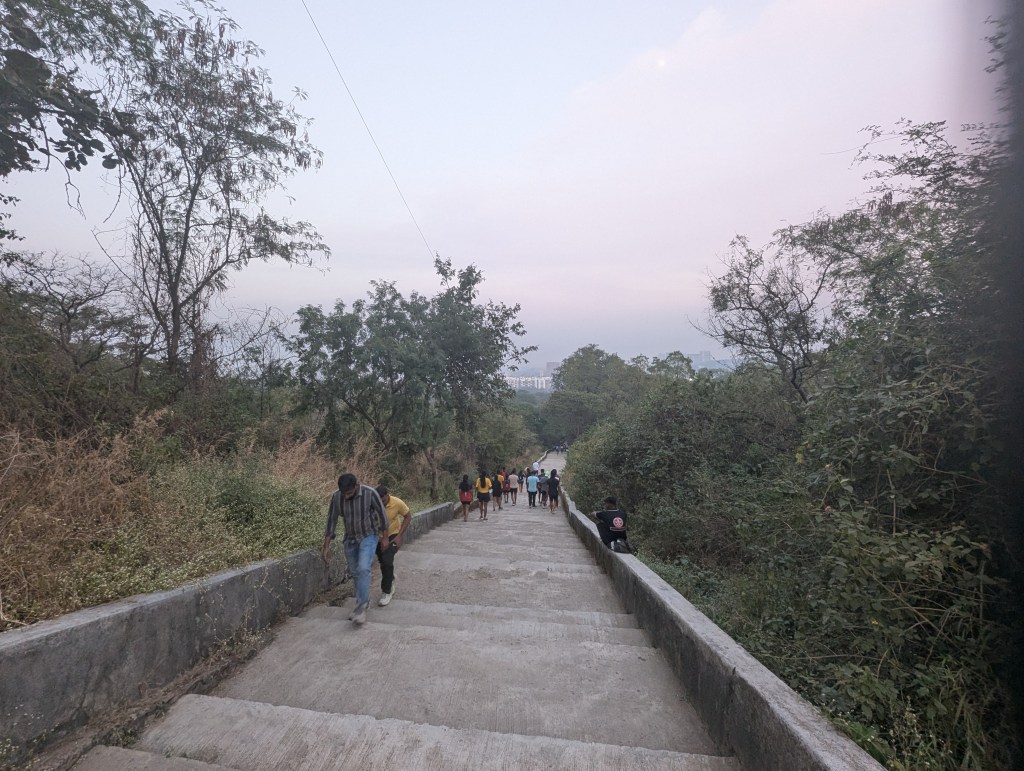
Infinite stairs at the tekadi
Day trip #5 Pu La Garden
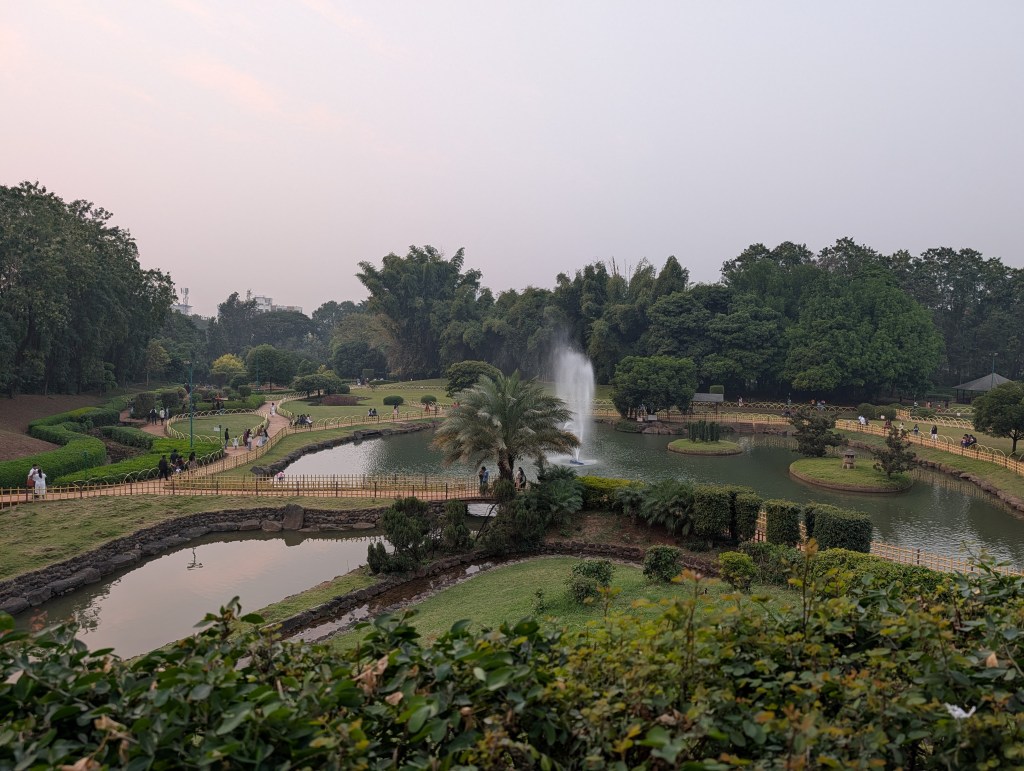
Pune-Okayama Friendship Garden (a.k.a. Pu La Deshpande Udyan) inspired by the 300-year-old Koraku-en Garden in Okayama, is one of the largest gardens in Pune located on Sinhagad road. Shinto, Buddhism, and Taoism were used in the creation of different garden styles in order to bring a spiritual sense to the gardens and make them places where people could spend their time in a peaceful way and meditate.
The entry fee is merely Rs.5.00 per visitor that helps upkeep and maintenance of the garden and its facilities.
To avoid damages and manage nuisance makers, there are few volunteers/garden employees who are (maybe) scattered around the huge 10 acres premises to watch over. We indeed saw an employee asking a visitor who was deliberately walking on the lawn not to do so. Hence proved. There are enough placards placed all around that says do’s and don’ts. However, who cares…!
The garden is open all days from 0600hrs to 1030hrs and 1600hrs to 2000hrs.
Readers can read more about this garden at Pune-Okayama Friendship Garden – Wikipedia
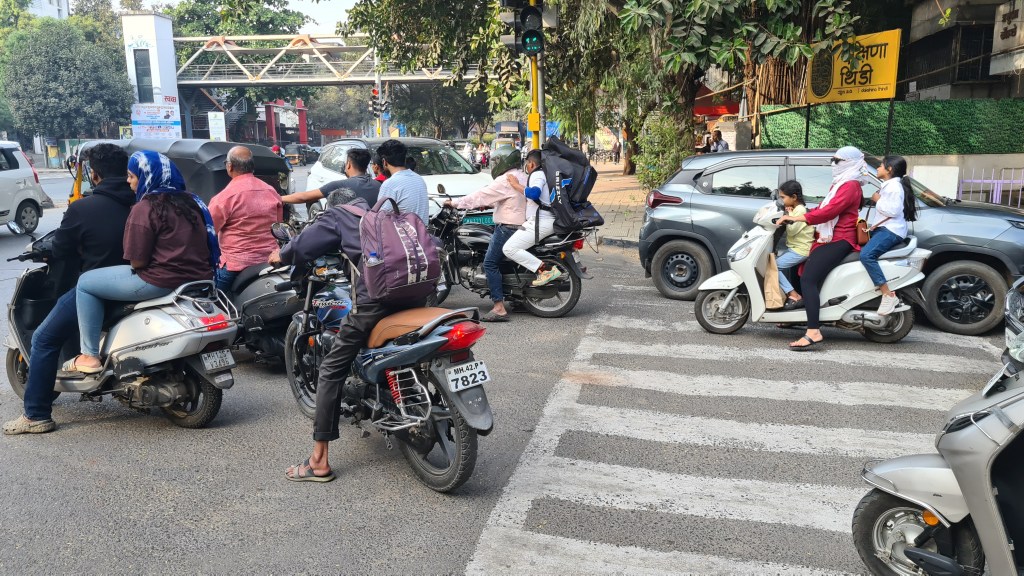
The garden entry is adjacent to a busy road with a 4-way intersection. As you might have read on my other blog(s), there too is no walk sign nor a walk signal at this junction. Zebra crossings are just for the sake and doesn’t deter the traffic nor helps pedestrians. I would suggest if you were elderly or have walking difficulties, only cross the road few seconds after the signal becomes red as there are many red light jumpers and you don’t want to get caught in them (the good thing is as there is a countdown timer – which displays how long the signal will stay red – you know exactly how much time you have to cross over)
This garden is excellent for a morning jog, an evening stroll/ walk, or just do nothing but sit on a bench and watch your surroundings. Won’t recommend for a run as it has no straight path anywhere.
It probably is worth assuming that being a 10 acre well managed garden there would be an abundance of variety of birds. However, if my memory serves me correctly, I didn’t see any. Unless I was there on a wrong day or wrong time. Readers who have experienced this garden can correct me and also write what different species they have seen. I would be very interested to know.
Though the garden premise is well secured and maintained, you cannot stop who would be visiting the garden with a different objective in mind. While leaving the garden I saw that there was a group of four boys travelling casually behind another group of girls. One of the boys slowly and cautiously tried approaching one of the girls, probably checking and asking her out. From the girl’s behaviour it was clear that she didn’t knew him neither was interested. Still, he was pursuing and did so till the exit where the group of girls stopped at a hawker completely disinterested in the boys. Good thing was the boy gave up and they went their ways.
To maintain the sanctity of this serene place, no food or drinks (water is fine) are allowed inside the premise. Neither there are any hawkers or food stalls inside the premise. There are certainly few outside the garden gate next to the busy road.
Day trip #6 Nashik – Tapovan
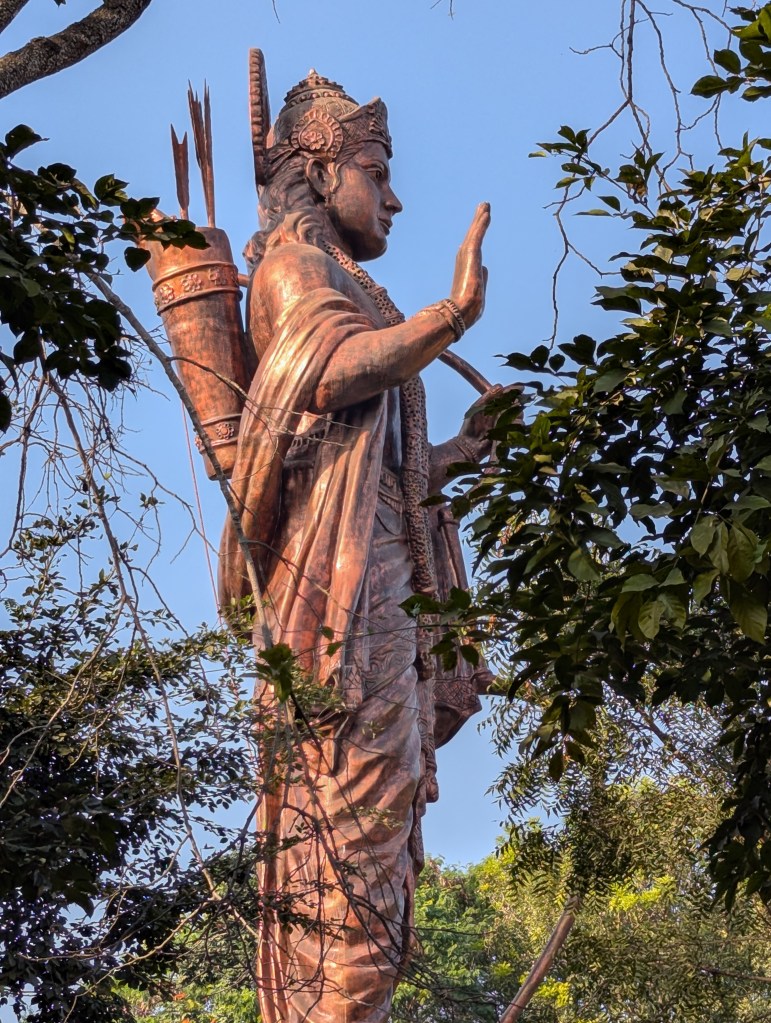
While on our way to Nashik, we happen to stumble upon Maharashtra’s tallest statue of Shree Ram. Inaugurated in October 2024, standing at an impressive height of 21.33 meters (70 foot), this statue is located in Ramshrushti Udyan within the Tapovan area of Panchavati, Nashik. The statue is made of fibre-reinforced polymer. As mentioned in the epic Ramayan, Shree Ram spent significant portion of his 14-year exile in the serene forest of Tapovan, thus bringing spiritual significance to this place.
There are many other smaller attractions in and around Tapovan. These were all walkable. I happen to visit them all in the matter of an hour. Panchavati, RaamKunda, Kaala Ram mandir (built with black stone), Gora Ram mandir, Pandavleni caves, Godavari-Kapila sangam, Sita Gufa (cave)* etc.
* I would like to make a note here in regard to the mythological site Sita Gufa. It is said that Sita stayed in this cave while in exile. Hence my curiosity piqued. When I walked towards this site to see the Sita Gufa, there was a huge line. Decided not to stand in that big queue and that too when it was sweltering. So, I asked around as to what this site is all about. One of the vendors gave me genuine (I hope so) feedback about this place. He mentioned that this Sita gufa is a man-made attraction and is not the original gufa. The original one is some place somewhere where you can’t go. Not sure how true this is but thought I should share with the readers.
Once you reach Tapovan, auto rickshaws can take you around to see 10 plus attractions (with a rate card) including the above. Once they see you as a tourist, they will be behind you to consider their ride to visit these attractions. I would say it is not a bad idea to accept such ride if you are unable to walk longer or have less time on hand. However, I have seen that they rush such groups at sites as the sole objective is to finish with one group quickly and grab another. Can’t blame as that’s their source of income for most. Tourism is booming in such sacred places.
Day trip #7 Nashik – Sula Winery
The next stop after Tapovan visit was India’s famous Sula Winery (Welcome to Sula Vineyards – India’s Favourite Vineyard).
The unique climate of Nashik helps in growing different grape varietals, each with its distinct personality. As per the website, Rajeev Samant (CEO) recognised the potential of Nashik for cultivating grapes and so he embarked on the wine making journey – founded Sula Vineyards – with the help of an eminent California winemaker, Kerry Damskey.
It’s a nice place to enjoy and spend your whole day here provided you are a genuine wine enthusiast, as wine tasting, drinking at the restaurant, and buying wines is what it is all about.
A virtual taste for the readers…!
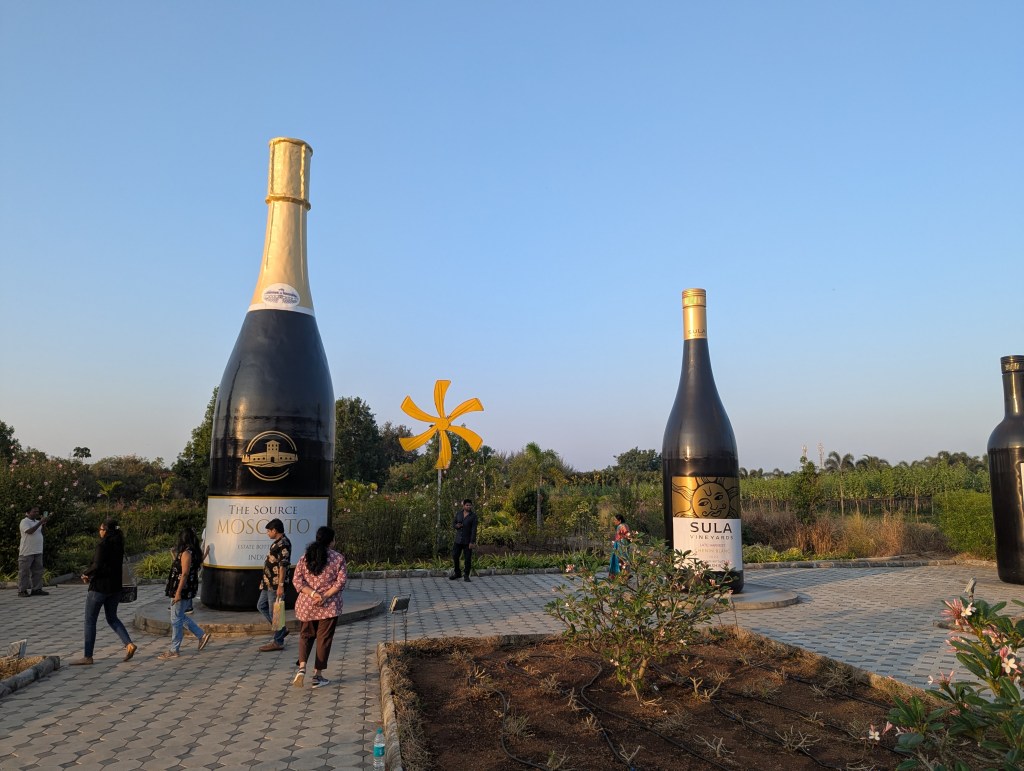
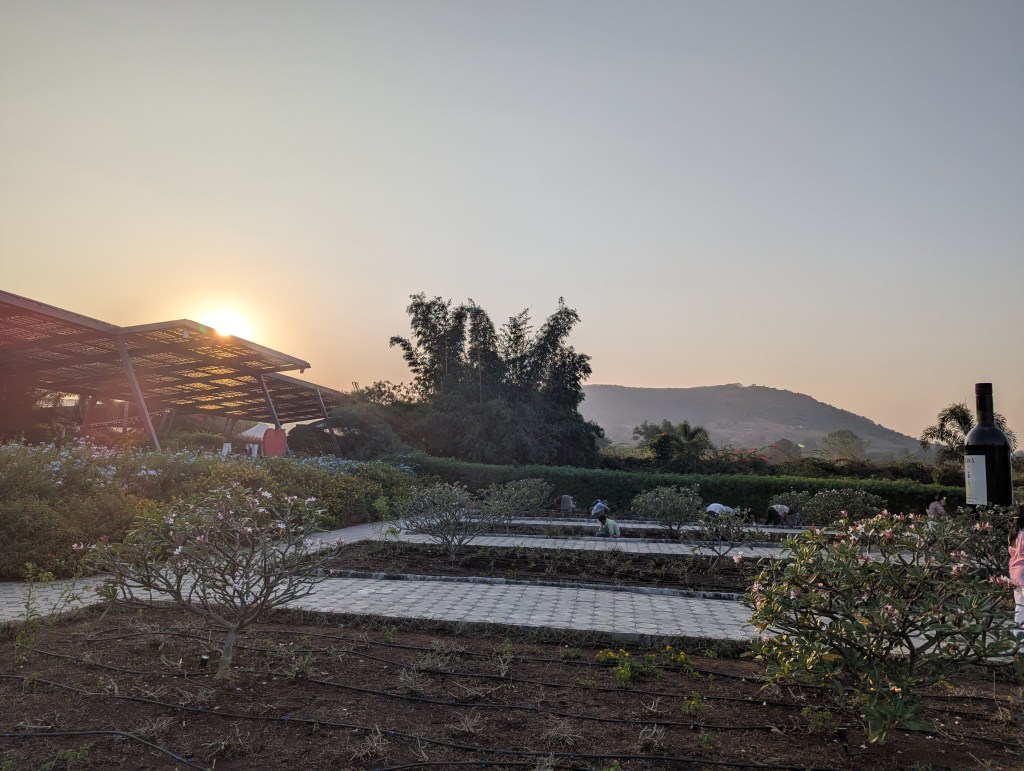
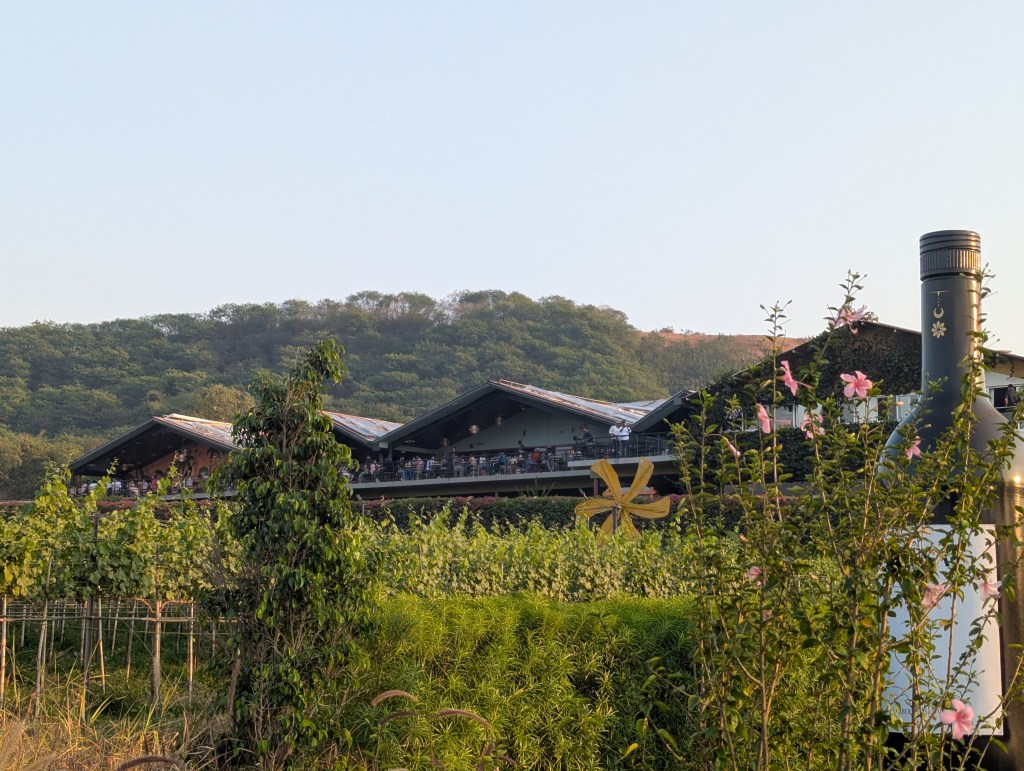
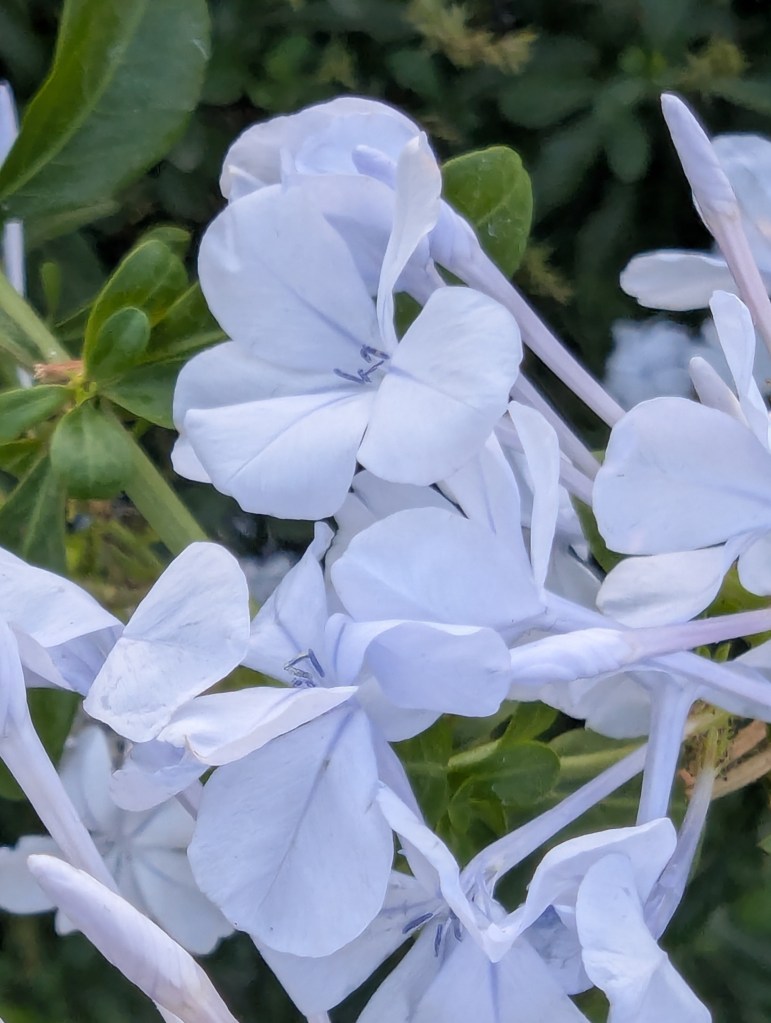
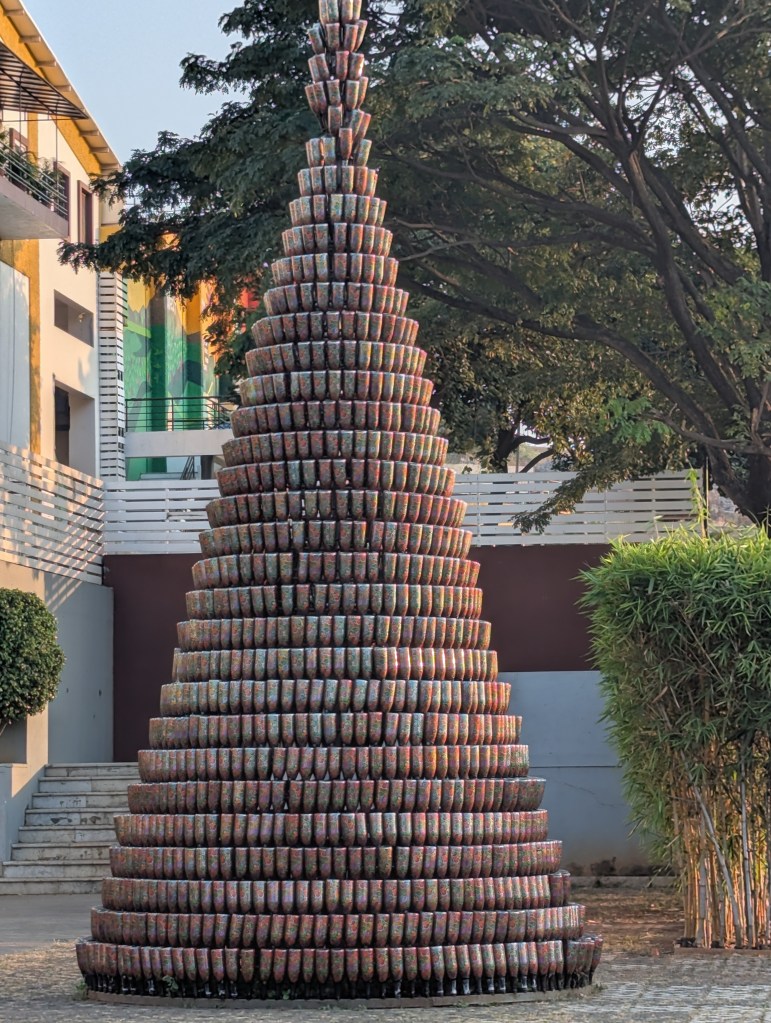
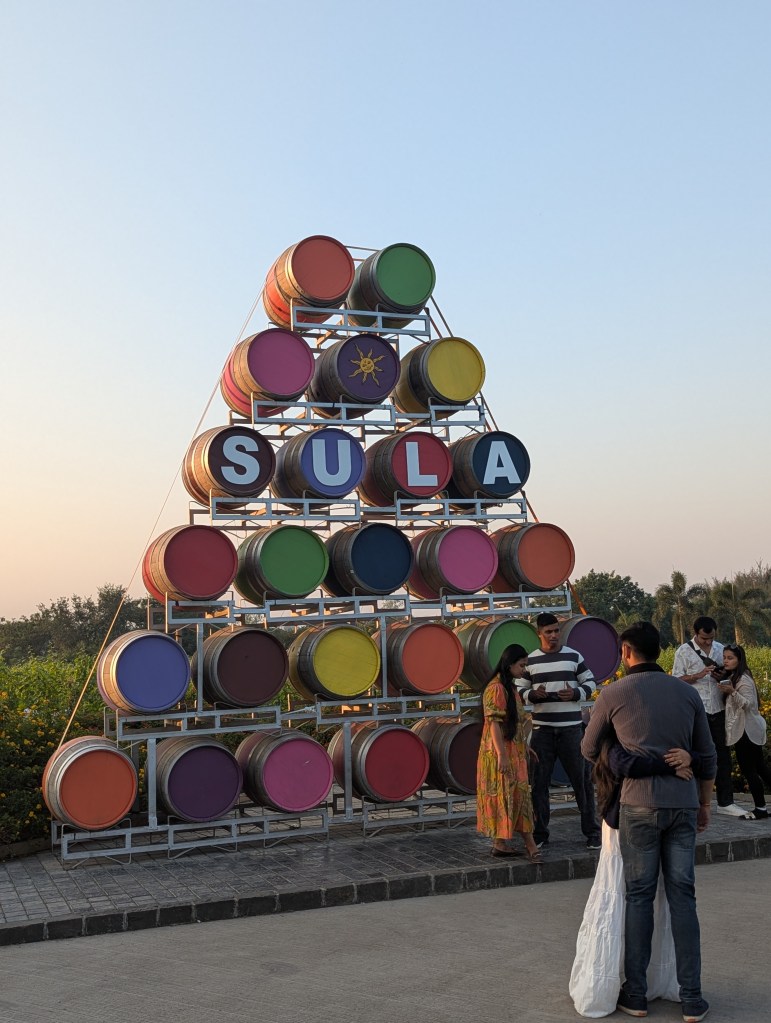
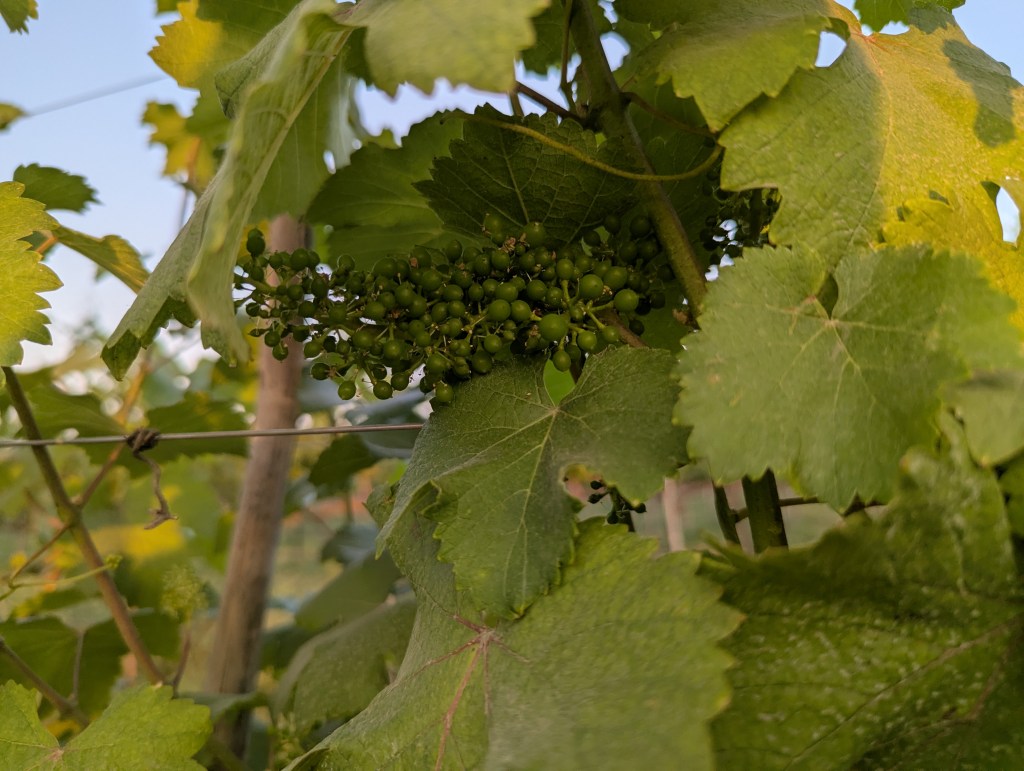
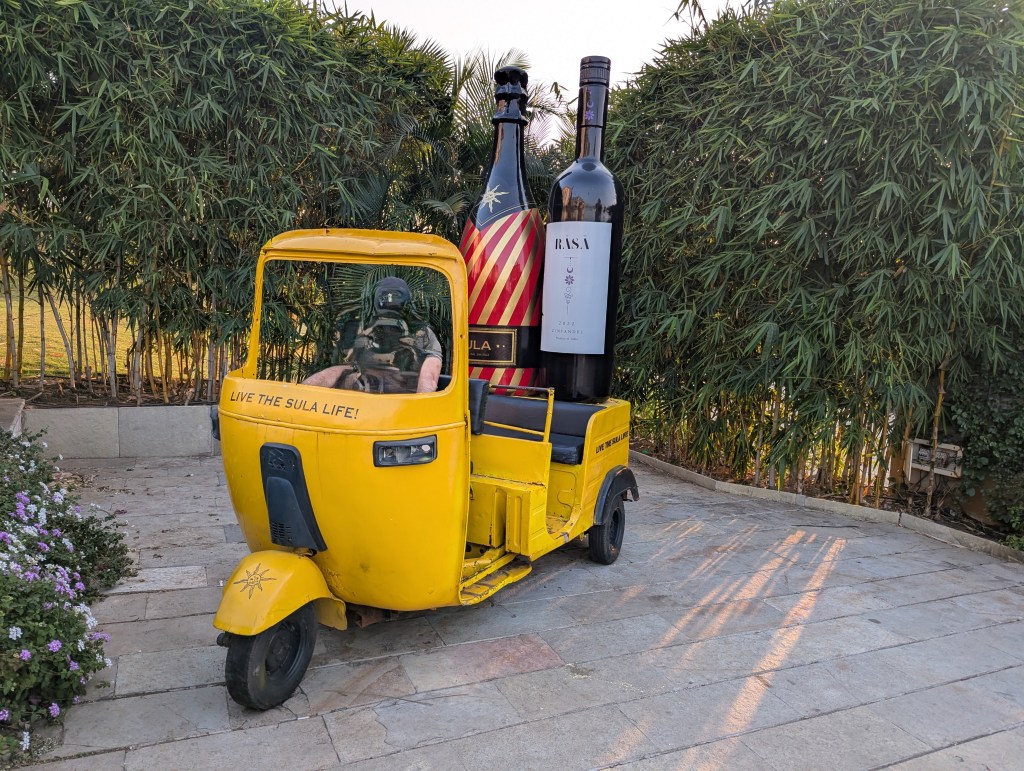
Gat 36/2, Govardhan Village, Gangapur-Savargaon Rd Nashik, Maharashtra 422222
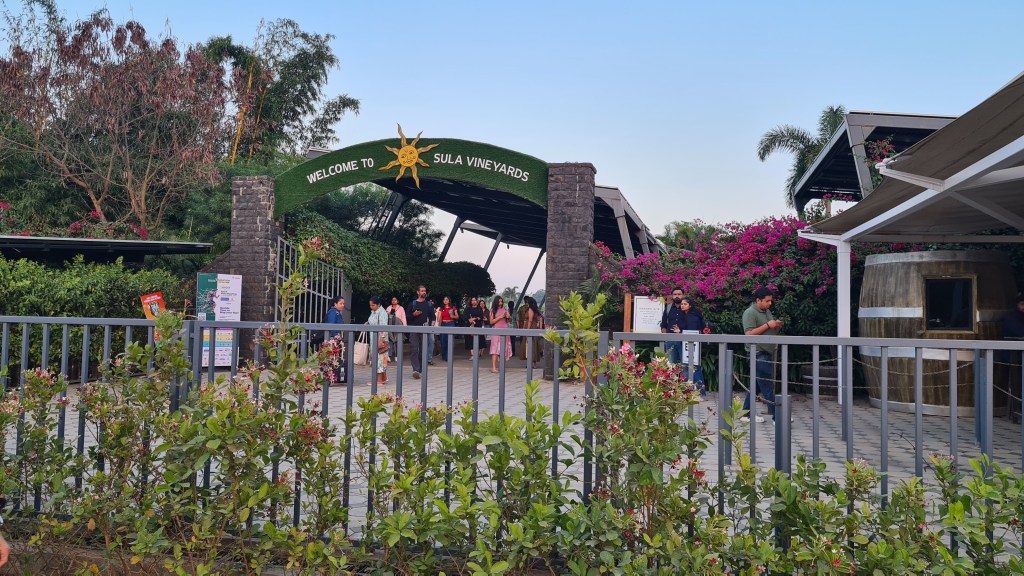
Visitors can also do a staycation at Sula Vineyards. When I last checked a 3 person Tower Suite was listed at INR 16K, which is dear price for some. But if you want a full immersive experience of the region, I guess this, is it.
For those who are new to this place, meaning first time visitors, the entry fee is INR 1000.00. It’s not all lost here if one thinks it’s too much to just see the vineyard. Visitors can use this (all of it) money (keep the receipt with you) to buy from the shop. The average price of a wine bottle hovers somewhere around INR 1200 upwards. You can buy glasses, wraps, accessories etc. It also has a big restaurant (I guess you can use this money there too, although I didn’t try so can’t say for sure) for which you need prior booking. When I visited this place, it was booming with people all around, the restaurant was full. Wine tasting experience is a different cost element and also need a prior booking, so you won’t miss.
Day trip #8 Nashik – Trimbakeshwar
Trimbakeshwar, located about 28 kilometres from Nashik, Maharashtra, in the town of Trimbak, is one of the most sacred pilgrimage sites in India. It is home to one of the twelve Jyotirlingas dedicated to Lord Shiva and marks the origin of the Godavari River, the second-longest river in India.
The current temple was built by Peshwa Balaji Baji Rao after it was destroyed by Mughal ruler Aurangzeb.
Unlike other Jyotirlingas, the one here has three faces representing Lord Brahma, Lord Vishnu, and Lord Mahesh (Shiva). And that’s why this ‘Shri Trimbakeshwar Devasthan’ has utmost importance among others.
We reached almost around nighttime hoping to get the darshan. However, upon reaching there and walking towards the entry for more than a kilometer, we found out that the general entry would take about 3 to 4 hours to get into. So, we tried our luck with obtaining a VIP pass. Even the VIP pass counter was closed as they had given away all their passes for that day, the next available was at 0530hrs next day. Not wanting to spend those many hours in the general line and not knowing how much actual it will take to get in, we settled on placing ourselves in front of a large digital board that was displaying the gabhara live. They had the live recording of the inner sanctum which we happily accepted, took the darshan and left.
I managed to take the temple view – see below – from outside (which was allowed).
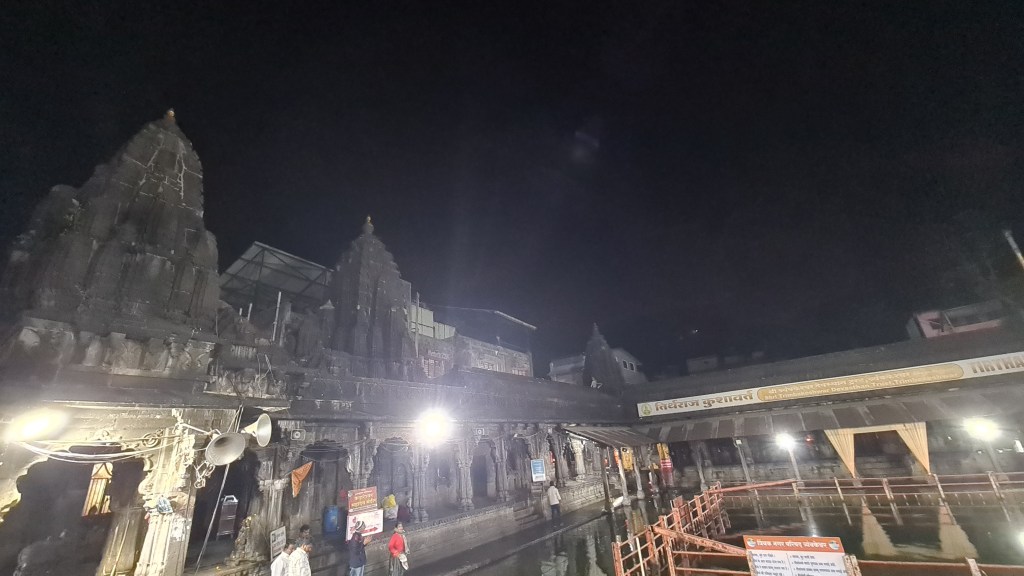
It’s a heavily crowded place. So be aware of your surroundings.
Depending upon which entry you take to get into the premises (there are few and are guarded by the police/ temple administration) you may have to walk a lot. We ended up walking more than a kilometer just to get near the outskirts of the temple as the road goes through hundreds of shops lined up on both sides. The actual temple seems to be lost in that chaos. And take a note, there is hardly any sign that tells you how far you are. Just keep walking. Ask vendors for directions if felt lost. We did the same.
Finding the counter for VIP pass could be a nightmare. There are no such boards – in line with your eyesight – that would direct you to the counter. However, while looking for one, I found a directional board perched atop a light pole, saying the way. You will find many such boards (looking up obviously) directing you. You would doubt if that’s any true as you won’t see the sign of a VIP pass counter for some time. And suddenly to your bewilderment the signs vanishes. You will see a very strange arrow pointing downwards on a wall saying VIP pass window, but there is none. However, if you circle a bit round the wall, you will find a small little building/room/shop which says VIP counter. Of course, it was closed when I arrived so couldn’t see much neither can guide you from here.
I would suggest, as previously mentioned, that if you want a darshan try weekdays only and avoid any auspicious day. Even then you will have to be ready to wait in the line for few hours.
For the interested readers, the twelve jyotirlingas are:
- Somnath at Veraval in Gujarat,
- Mallikarjuna at Srisailam in Andhra Pradesh,
- Mahakaleswar at Ujjain in Madhya Pradesh,
- Omkareshwar in Madhya Pradesh,
- Kedarnath in Himalayas,
- Bhimashankar in Maharashtra,
- Viswanath at Varanasi in Uttar Pradesh,
- Triambakeshwar in Nashik in Maharashtra,
- Vaidyanath at Deoghar in Jharkhand,
- Nageshwar Temple at Dwaraka in Gujarat,
- Rameshwar at Rameswaram in Tamil Nadu and
- Grishneshwar at Aurangabad in Maharashtra.
Day trip #9 – Shani Shingnapur
This place is famous for Shree Shanidev Temple. This temple is located in Ahmednagar district of Maharashtra and is a world-famous pilgrimage site dedicated to Lord Shani (planet Saturn). It is believed that the deity resides in the temple and actively protect the village. And hence it is said that (which is true in certain degree) there are no doors to any of the homes in this village. At present the homes now have doors but no locks (there is a documentary about this on YouTube). Since it is believed that no one dares to rob anyone in the village, and if anyone tries, they have either returned back the goods or met their fate.
The village of Shani Shingnapur is famous for its doorless houses and shops. Local residents believe that Lord Shani punishes anyone who attempts to steal, leading to a tradition where homes have only door frames but no actual doors or locks. This faith extends even to local institutions, including a “lock-less” bank.
For more information search (Shani Shingnapur – Wikipedia) or visit the official website Shri Shaneshwar Devasthan Shanishingnapur
The deity itself is no humanlike figure nor represent one. Instead, it is a 5.5-foot-tall black stone, installed on an open-air platform, symbolising the deity’s omnipresence.
The temple premise is architecturally very beautiful (as you may see from the below images), newly renovated (as we were told by our driver a.k.a. tour owner – let’s call him from now Mr. Joshi – that this facility was not there few years ago, one could directly go to the place of the deity), super clean and serene. As it was a weekday there was not much rush.
Another attraction would be to drink fresh sugarcane juice extracted by the bulls instead of machines. You will see hundreds (might be a little exaggerated, but you know what I mean) of pandals (tents) lined up on roads leading to and away from this village especially adjacent to the highway.
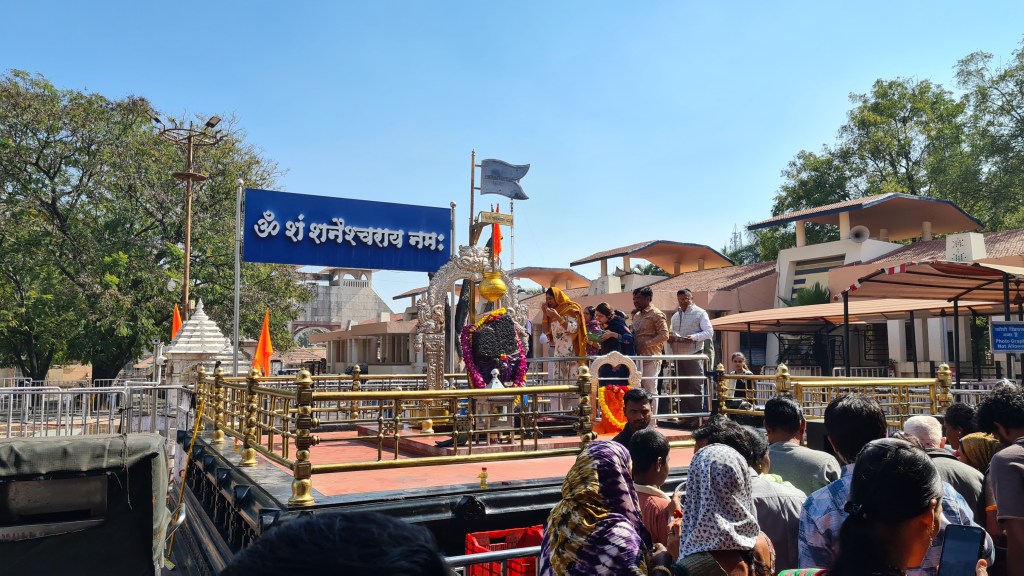
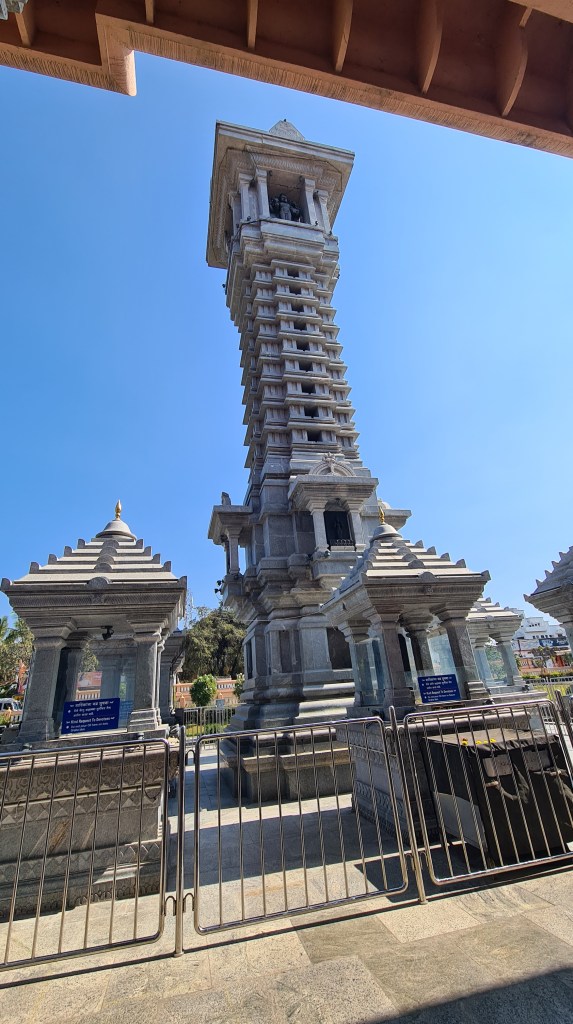
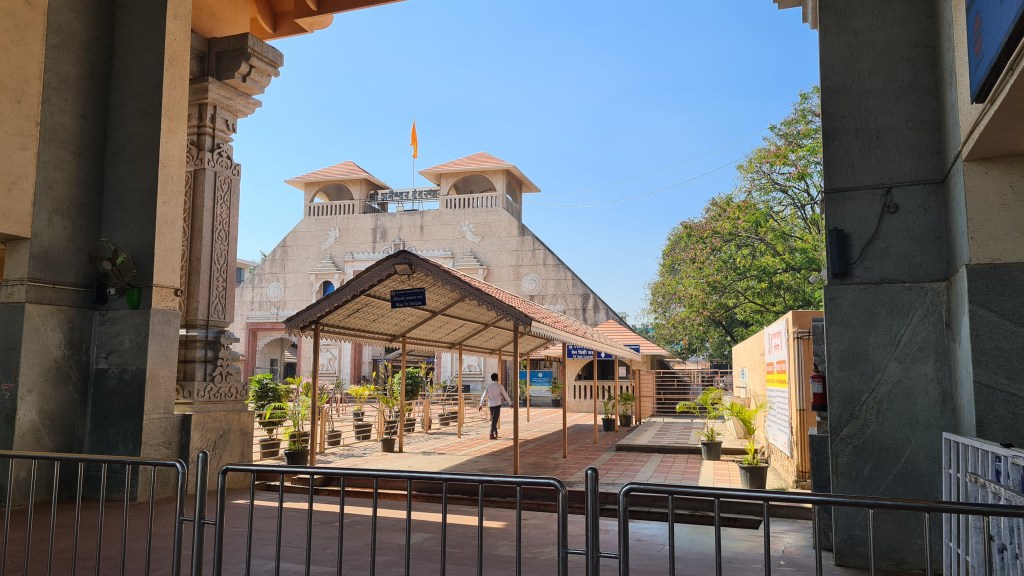
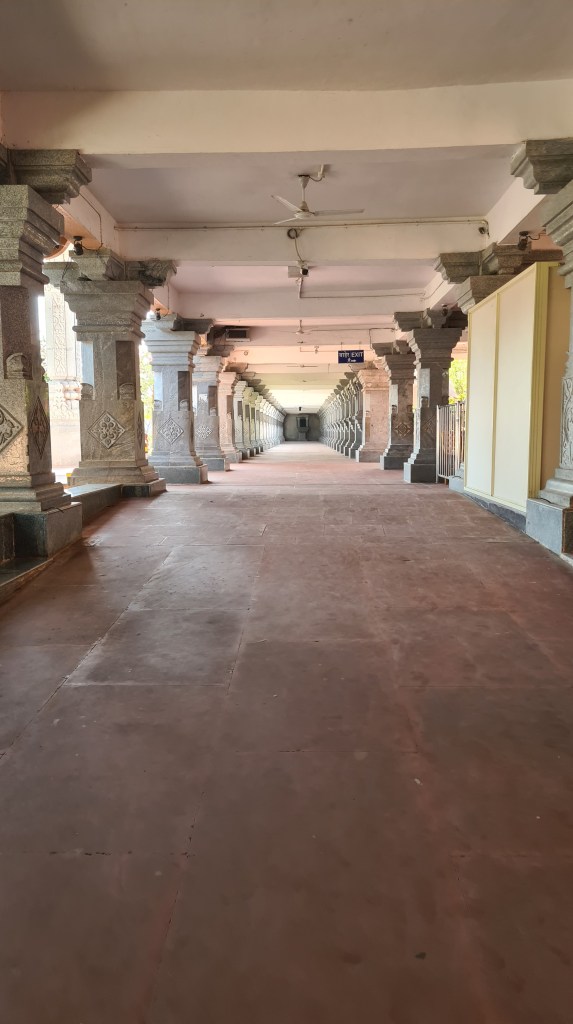
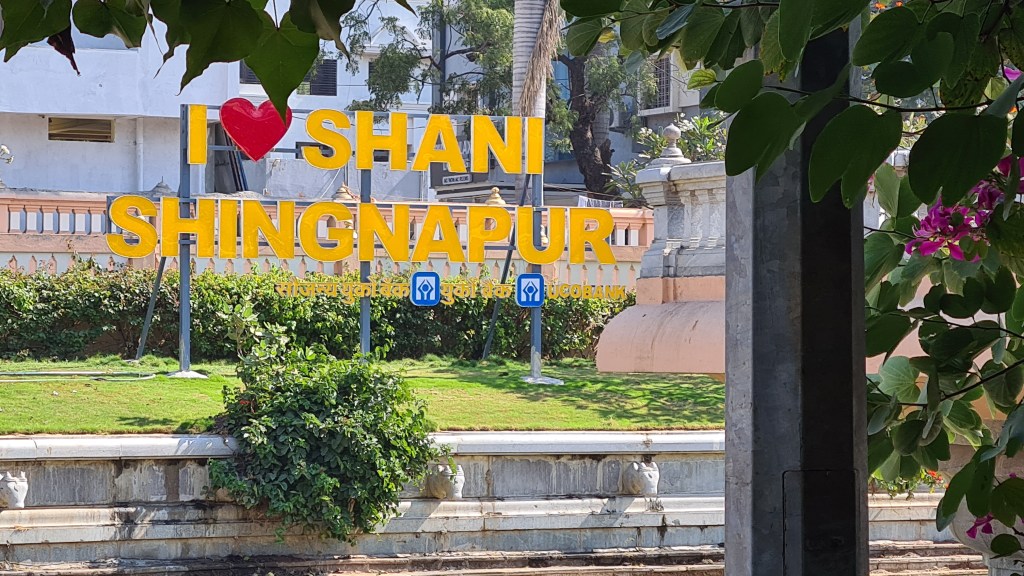
This temple has a huge parking of its own. Large tour buses are often parked here. This parking is laced with numerous stores selling offerings and souvenirs.
*** ALERT ***
We have experienced this, so I am alerting others. Avoid if possible. When you enter the road – entrance gateway – that leads to the temple you will be lured by vendors who will stand in the middle of the road and stop your vehicle and direct you to their shop saying you can park there for free. Ours met us at one of the entry roads, told us that they have a free parking and we should follow him. It was a single small road, so we initially ignored him and kept on going further. However, he was leading us on his bike and when his shop came close, he stopped in the middle of the road and asked us to enter the particular shop. Not knowing anything about this place (however our tourist guide/driver should have been knowledgeable about these tricks) we blindly followed, just happy that we got to park under the shade away from the sun.
Then the trick start to unfold. We were initially told that once you park there is a way from backside which will lead us straight to the temple. However, we met a pujari (let’s call him that as I don’t know what to tag him as) who suddenly appeared from his shop desk and greeted us. Then he started asking questions about who we are and started giving us all the necessary information about the mandir and the offering process. We were glad that someone is giving is free information that we never knew about. Then came the twist. The pujari handed each of us (me, my wife and the driver) a basket full of several things which we were expected to offer the deity. No price was discussed at this point. We appeared hypnotised and unknowingly went with the flow. Collected the basket, moved to leave, then there was another small stall selling oil and metal stuff – more offerings non-negotiable. We paid INR 600-900 odd each for this alone.
Then we asked for the backdoor entry through which we were told we can visit the temple. But there was no such thing. The guy led us back on the road, we travelled few meters and then we saw what we should have seen in first place if we were not robbed off our path. There was the entry to the mandir premise starting with the huge parking area. We all cursed and cursed but controlled as we were now in sacred area. We crossed the parking area, left our shoes at the collection centre, then entered the actual temple premise.
When we came back to collect our car, we were then asked to pay for the baskets, INR 550 each. We treated all of this as a donation for a good cause and forgot we were duped. Left it to Lord Shani to deal with it.
These vendors (or their representatives who are employed to lure customers and then get a commission) probably can’t be avoided as they block your road, doesn’t matter which small or large vehicle you are in, ensuring you won’t see the real entry to the free parking made available by the temple, thus don’t get to choose whether to buy the offerings or not. By luring they force you to buy from them. I guess all this is true for new visitors. The one who visits most would know these tricks and hence avoid too.
**** Next adventure is the 9 days Konkan Trip…..stay tuned